


Posts

Posts


Careers website build
To build a branded careers website, start with the brand system, not the homepage. Decide what "branded" has to mean on every page, map the story to each page type, connect jobs from your ATS without losing the brand, then choose a builder that lets your own team keep it that way. Here is the sequence I would follow.
I have watched a lot of careers website projects start in the same place: someone opens a design tool and starts on the homepage. Six weeks later there is a beautiful homepage, a job page nobody has thought about, and a brand that disappears the moment a candidate clicks on a role.
So here is my question before any build starts: if a candidate only ever saw your job page, would they know it was you?
Branded does not mean your logo and your colors. Almost every careers page has those. A branded careers website is one where the experience, the words and the proof are recognisably yours on every page a candidate visits. In practice that means four things:
Before you design a single page, agree the system every page will be built from. It is less glamorous than a homepage concept, and far more important. Your brand system for a careers website should cover:
| Part | Decide |
|---|---|
| Color roles | Which colors do which jobs (backgrounds, buttons, highlights), with contrast checked |
| Type scale | Headings, body and captions that work on a phone first |
| Components | The blocks every page is built from: heroes, story cards, job lists, FAQs, calls to action |
| Imagery | What real photography and video look like, and what you will never use |
| Tone | Three or four rules, with examples, for how you write about the work |
Once that exists, every page you build inherits it. Without it, every page is a fresh negotiation.
Every page on a careers website exists for a different moment in a candidate's head. The homepage is a first impression. A team page asks "where might I fit?" A job page asks "could I do this, and would I want to?" The story stays the same. What changes is the emphasis.
Different pages have different jobs. Different jobs require different stories.
That line is from Sell The Truth, and it is the planning rule I would pin above any branded careers website project. Map your pages to their jobs before you write a word:
| Page | Its job | Brand proof it needs |
|---|---|---|
| Homepage | Why this employer? | Your clearest promise and real people |
| Team or function page | Where might I fit? | What the work is like and who does it |
| Location page | What is it like here? | Local people, local jobs, local facts |
| Culture and benefits | Do I believe this? | Employee stories and concrete policies |
| Job page | Could I do this? | A relevant story beside the role, and an easy apply |
This is where many branded careers websites fall apart. The beautiful pages sit on one system and the jobs sit on another, and the moment a candidate clicks "view jobs" they land on a plain ATS list. The fix is to keep jobs in your ATS but show them inside the branded careers website, with job pages built from your own templates. The application can still go to the ATS, by redirect or an embedded form, but the candidate should not feel the join.
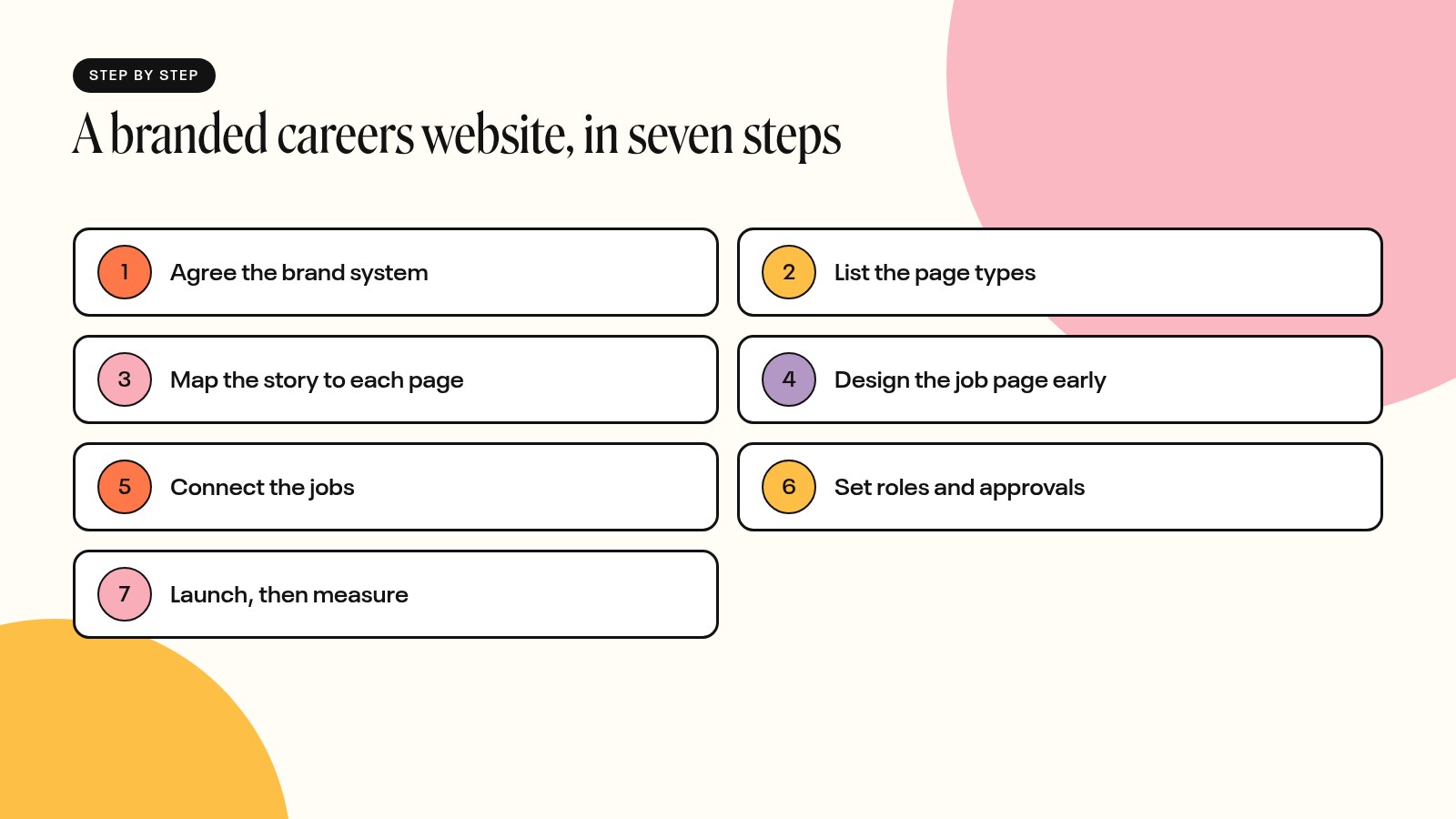
Here is the order I would use. It keeps the brand at the center and stops the homepage eating the whole project.
Once you know what you are building, the choice of builder gets much easier. You are looking for a branded career site builder that holds your brand system, carries story on every page type, connects to your ATS and lets your own team edit without a developer, inside rules. If you are comparing the wider product category, our career site builder page shows how the Happydance block library, CMS and timelines work.
And in the demo, ask them to build a job page, not show you a homepage.
Bring your careers website and the pages your team finds hardest to keep on brand. We will show you, on a live system, how Happydance would run them.
Explore the branded builder Book a demo
Prefer to write? Contact us and tell us what you are working on.
A careers website that looks, reads and feels like your organization on every page a candidate visits, including the job page, with real proof behind its promises.
It depends on scope, languages and approvals. A typical single-brand enterprise build on Happydance takes around 12 weeks, and more languages, brands and integrations add time.
Not for day-to-day changes, if the builder is designed for it. Your team should be able to create and update pages from approved templates, with roles and approvals keeping the brand consistent.
Re-skinning changes the look of one page or a jobs list. A branded careers website is a full site built around your employer brand, with story, proof and job pages that carry the brand on every page.
Ask them to build a team page from a template, add an employee story, link live jobs, send it for approval and publish it on a phone-sized preview, without a developer.
About the author
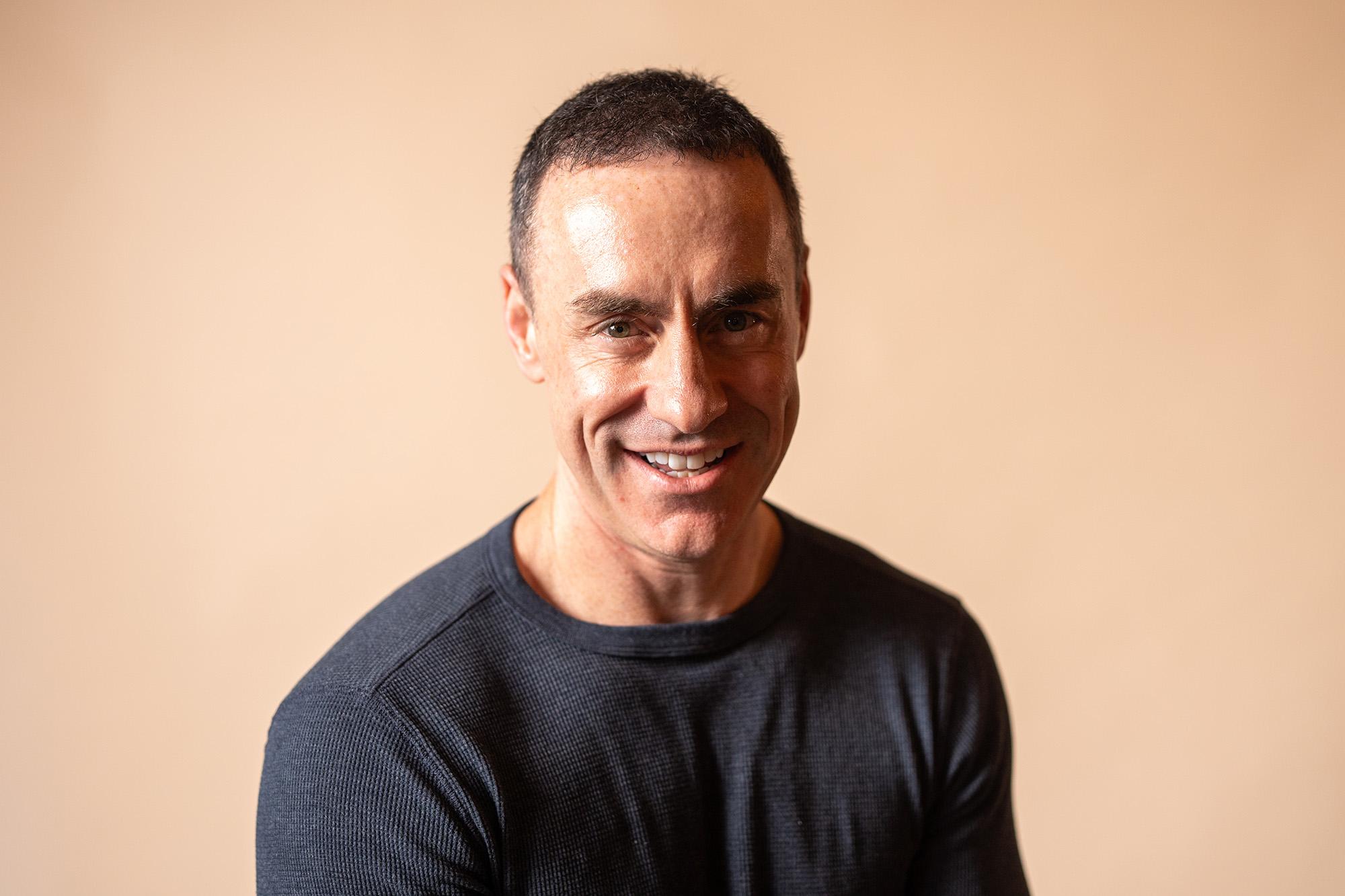
Bryan Adams is the founder and CEO of Happydance and the author of Sell The Truth.
Posts

Posts

Posts