


Posts

Posts


Who Thrives Where
There is no single best tech company for software engineers, but there is a best fit. Uber, Canva, Dropbox and Grab are all brilliant places to build software. They just reward different people.
Uber suits engineers who want their code to move people and goods through real cities at huge scale. Canva suits product-minded engineers who love making complex things simple for a vast audience. Dropbox suits self-directed engineers who do their best work with autonomy and deep focus. Grab suits engineers who want ownership and regional impact in an AI-first company building for Southeast Asia.
Every claim below links to the employer's own careers website or published employee stories. We link to team, culture and early-careers pages rather than individual job adverts, so the links stay useful long after any one role closes.
| Employer | Best fit if you... | How you will work | Start here |
|---|---|---|---|
| Uber | want your code to move real cities at global scale | Hybrid, with office anchor days for many teams | Uber engineering |
| Canva | are product-minded and love simplifying the complex | Hybrid, permanently remote or onsite, by role | Canva engineering |
| Dropbox | do your best work with autonomy and deep focus | Virtual First, async by default | Dropbox engineering |
| Grab | want ownership and regional impact in an AI-first company | Southeast Asian hubs | Grab engineering |
Because the skills that get rewarded are shifting fast. Dice reports that the share of tech job postings asking for at least one AI skill rose from 15% in January 2024 to 73% in May 2026, and that the roles staying open longest are specialised ones such as architecture and security. So the better question is: where will I learn fastest, in a way that suits how I work?
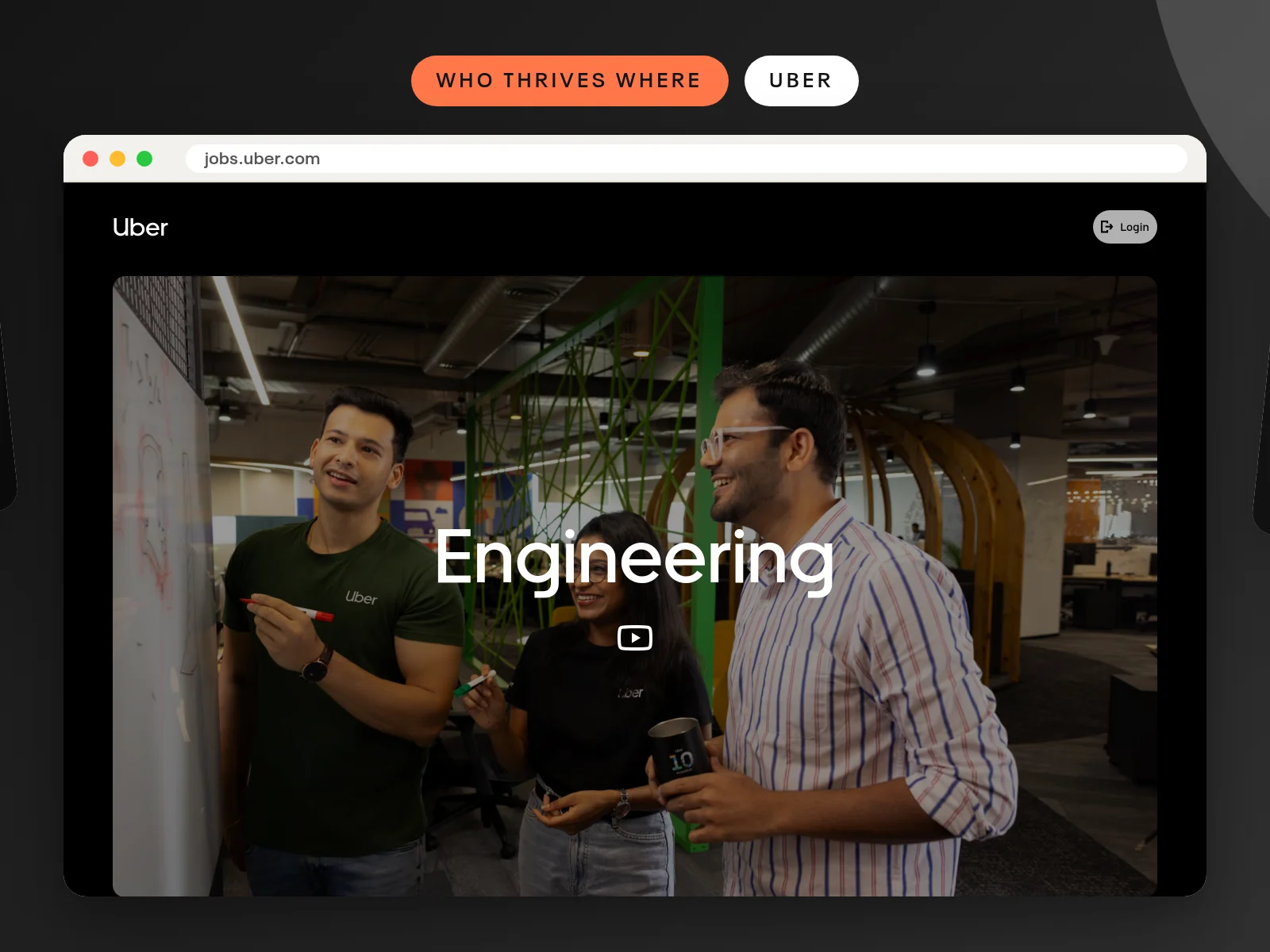
Fast, complex and very visible. Uber says it builds technology for real-world movement and puts it plainly: "The work is complex. The pace is fast. The impact is visible." (Why Uber). Its engineering team page describes systems that learn from billions of signals in real time.
The proof: in Engineering growth at Uber scale, Senior Engineering Manager Divya Rai describes a team processing 1.5 million logs per second in real time, and says the culture of empowering engineers "really surprised me". In Flavia's Journey to Software Engineering Manager, Flavia Rangel joins as a software engineer in 2018, when Uber's Brazil Tech Center was a handful of people, and grows into leading the Trusted Identity team. Watch Building tech that moves the world forward.
Uber is refreshingly candid: "Working at Uber isn't easy; it can't be." (Benefits). Divya's story describes Tuesdays, Wednesdays and Thursdays as office anchor days, so check the pattern for your team. Technical roles include a collaborative, real-time technical interview (How we hire).
Engineers who enjoy ambiguity at scale, like working closely with product partners in person and want to see their work on the street. Why it is worth it: few places offer this scale (Uber says 9.9 million people earn through its platform every month), and all new parents can take up to 18 weeks of fully paid parental leave.
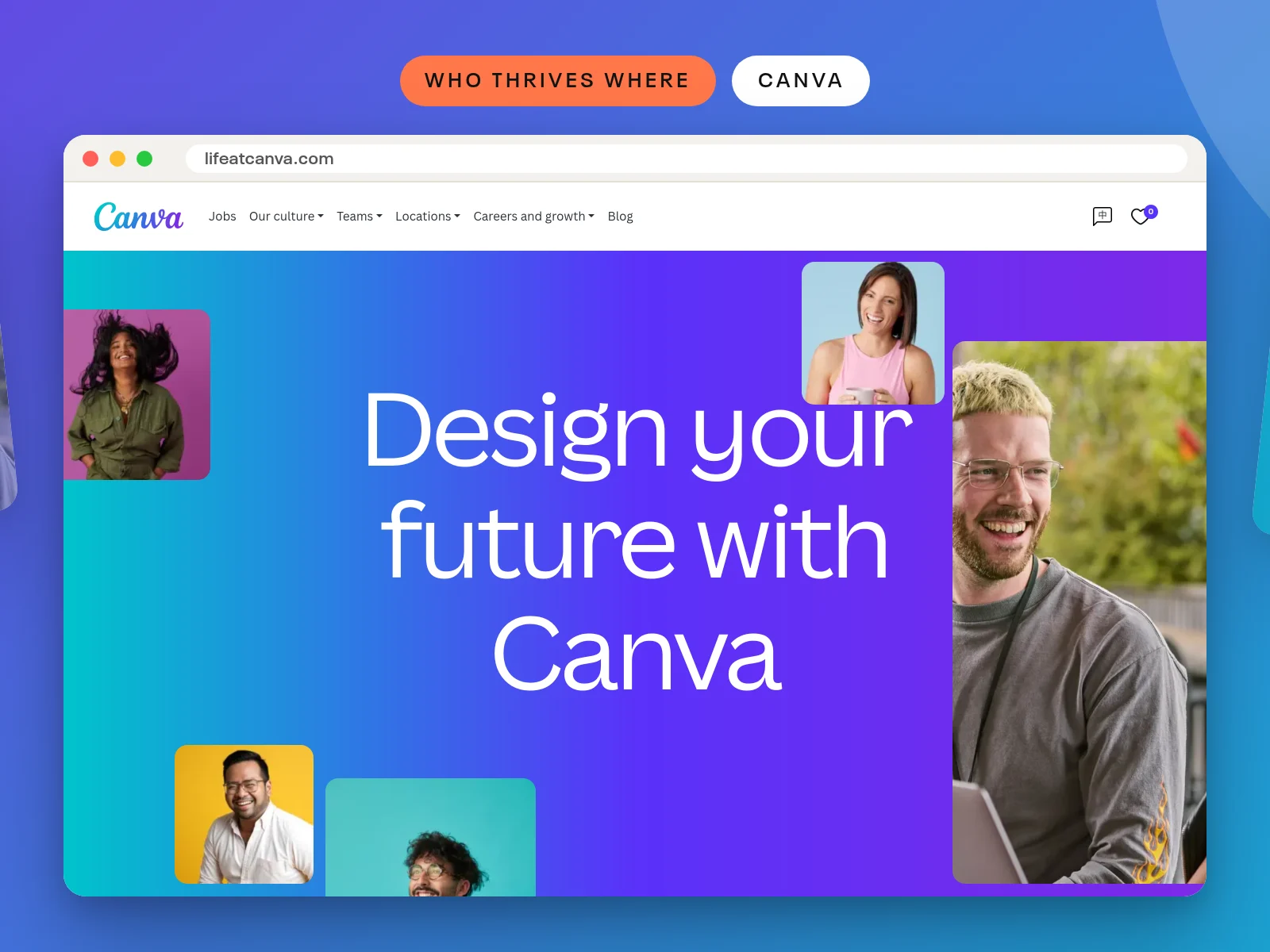
Ambitious and deeply user focused. Canva's engineering page sums it up: "The work? Challenging. Your impact? Powerful." Engineers build for 260 million monthly active users in over 190 countries and aim to "Strive for Pragmatic Excellence".
The proof: in Jade lifts the lid on engineering and leadership at Canva, Engineering Director Jade Loyzaga describes her group growing from 40 people to 13 teams of more than 140 Canvanauts, and calls the experience "such an accelerator for your personal and career growth". The Two-Step Plan video explains why growth matters at Canva: Step One grows the company, Step Two uses that growth for good.
Canva is still scaling. Jade was told to "Get ready to jump into some meaty challenges!", so expect change and big goals. You can work hybrid, permanently remote or onsite depending on your role and team (Benefits and ways of working). Engineering openings come and go quickly, so save a search on the Canva jobs page.
Product-minded engineers with real empathy for users, who like to dream big and start small. Why it is worth it: 18 weeks of paid parental leave from day one for permanent employees, equity, an annual Vibe & Thrive allowance and five extra days of flex leave.
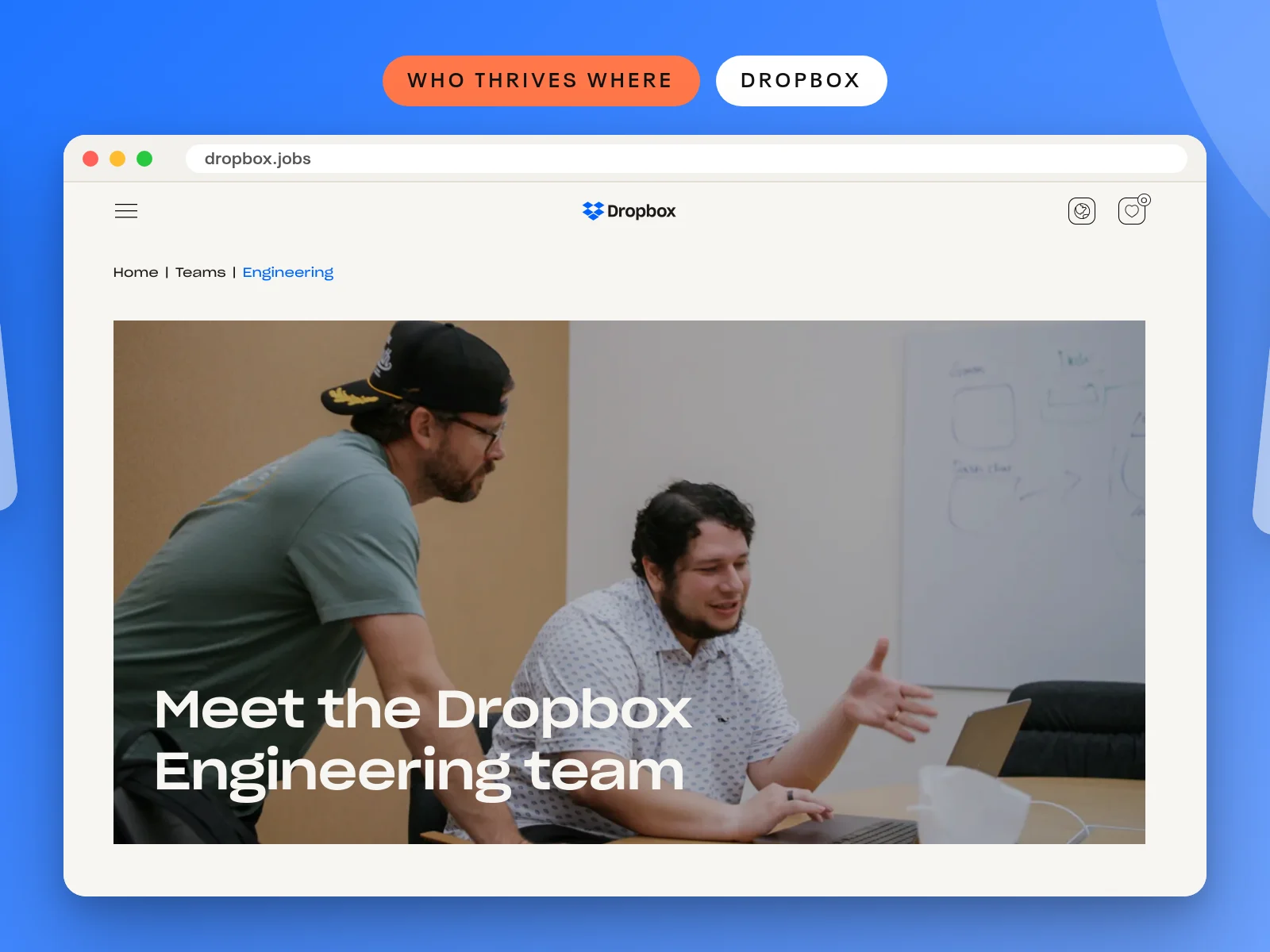
Autonomous and focused. Dropbox promises "the freedom to master your craft, experiment boldly, and be your true self". Its Virtual First model is async by default, with nonlinear schedules and core collaboration hours, and its engineering team runs systems that manage exabytes of data.
The proof: Experimentation, craft and community describes a team spread across time zones that spotted, discussed and fixed an issue in 15 minutes. A Kraków engineer, writing in The impact of Dropbox's engineering and community on my career growth, calls the non-linear workday "literally a life saver". Dropbox reports that 92% of employees in its internal surveys say Virtual First is a key reason they stay. Watch Hans: Behind The Build.
Async work rewards clear writing and self-discipline. The same engineer admits: "It often takes determination to resist the urge to schedule yet another meeting." Roles are remote within named countries (the US, Canada, Mexico and Poland in our 9 November check), so read the location line before you apply.
Self-starters and strong writers who value deep focus and can build trust at a distance. Why it is worth it: real autonomy, an engineering career framework that spells out what impact looks like, and a hiring promise to update you within ten business days at every stage (How we hire).
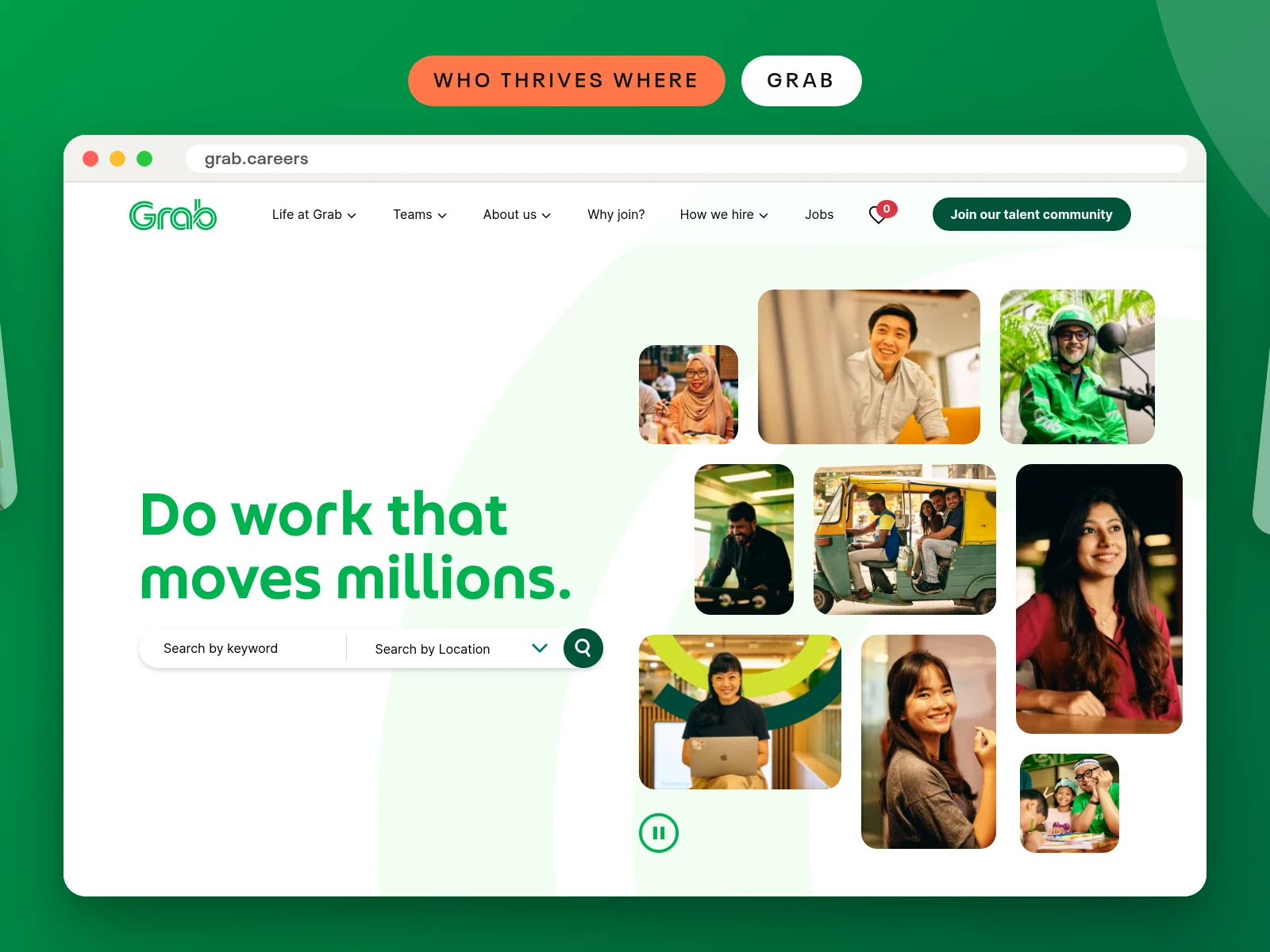
High ownership and real-world impact across Southeast Asia. Grab describes itself as "an AI-first company with heart" and tells engineers "you won't be a tiny cog in a massive machine, you'll be the one with the keys" (Engineering at Grab). Its 4Hs, Heart, Hunger, Honour and Humility, are "the standard we hire for" (Our values).
The proof: Growing with Grab: Futureproof a career with new skills follows Liu Zhiwu from Senior Site Reliability Engineer to Lead Software Engineer in GrabDefence, learning Go along the way. An Interview with a Grab Inventor profiles Renrong Weng, the first Grab Master Inventor. Engineering Manager Zou Yun says: "Learning within the Engineering team never stops."
The engineering interview includes live coding on data structures and algorithms plus a system design discussion, and Grab asks candidates to "Stay AI-Ready". Honour means "We debate fearlessly, commit fully", so bring opinions. Most engineering roles sit in Southeast Asian hubs such as Singapore, Petaling Jaya and Jakarta.
Curious engineers who take ownership and can explain technical choices to anyone. Why it is worth it: Grab rewards inventors for patents, and its stories show people moving between teams and countries as they grow.
All four are admirable engineering employers. Read one story from each, then follow your fit:
Yes. All four run early-career routes: Uber Emerging Talent, Canva Early Careers, Dropbox Emerging Talent, and Grab's internships and GRIT trainee programme.
For employer brand leaders
If you lead employer brand and found your way here, these four careers sites are worth studying. Each one answers the candidate's next question on the page where they are deciding, with a real person as proof.
States its EVP in three short sentences ("The work is complex. The pace is fast. The impact is visible.") and backs it with candour ("Working at Uber isn't easy; it can't be"). Honesty about the hard parts makes the rewards believable, and people stories are filed by theme so team pages always have proof to hand.
The engineering page opens with a promise and a question ("The work? Challenging.") and the Two-Step Plan ties the mission to growth. A dedicated ways-of-working page answers the flexibility question before a candidate has to ask it.
Virtual First has its own destination page, so how work works is part of the EVP, not small print. A published hiring promise (an update within ten business days at every stage) turns candidate experience into a visible commitment.
The 4Hs are published as "the standard we hire for", so the EVP doubles as selection criteria. Team-specific hiring pages explain the engineering interview, and named growth stories show careers moving across teams and countries.
Want to build that kind of proof library? See how the Happydance employee stories module helps teams collect and publish stories like these, and if you are reviewing platforms, our enterprise career site platform guide sets out what to ask. For more inspiration, browse the top 10 EVP examples in US tech and UK tech.
Browse every comparison on the best companies to work for hub, or read the best employee stories on careers websites.
Fast, complex and very visible. Uber says "The work is complex. The pace is fast. The impact is visible." Its engineering stories describe systems that process 1.5 million logs per second, and a hybrid pattern with office anchor days for many teams.
Ambitious and deeply user focused. Canva engineers build for 260 million monthly active users in over 190 countries, and Canva offers hybrid, permanently remote or onsite working depending on the role and team.
Autonomous and focused. Dropbox is Virtual First, async by default with core collaboration hours, and it promises to update candidates within ten business days at every stage of hiring.
High ownership with real-world impact across Southeast Asia. Grab calls itself "an AI-first company with heart" and hires against its 4Hs: Heart, Hunger, Honour and Humility.
Dropbox is Virtual First and Canva offers permanent remote for some roles. Uber is hybrid, and most Grab engineering roles sit in Southeast Asian hubs.
Each company publishes its process. Uber runs a collaborative, real-time technical interview, Grab uses live coding plus a system design discussion, and Dropbox aims to update you within ten business days at every stage.
Increasingly, yes. Dice found that 73% of tech job postings asked for at least one AI skill by May 2026, up from 15% in January 2024.
We read each company's own careers website and published employee stories on 9 November 2026. Happydance builds careers websites for all four employers. Nobody paid to appear, and each employer was invited to check the facts before publication.
Disclosure: Happydance designs and builds careers websites for the employers featured in this guide. Nobody paid to be included, and each employer was invited to check the facts before publication. Last checked: 9 November 2026.
Posts

Posts

Posts